
Office pods and the wear and tear allowance
A pod bought for your business is a capital asset, and the section 11(e) wear and tear allowance lets you write its cost off against taxable income over the asset's expected life. This page sets out how that works, with a worked example. It is general information rather than tax advice, so confirm your own position with your accountant.
Moveable asset, not leasehold improvement
The distinction worth understanding is between money spent on the premises and money spent on equipment the business owns. Partitioning a meeting room is a leasehold improvement: it is tied to the building, written off over the lease, and it stays behind when you move.
A FocusPod is furniture. It sits on the floor, it is not attached to the structure, it needs no landlord construction approval, and it moves with you. That puts it in the category the section 11(e) wear and tear allowance is designed for, which SARS sets out in Interpretation Note 47 along with the write-off periods it will accept.
The practical consequence is not only tax. A pod is an asset you still own if you change buildings, where partitioning is spend you cannot take with you.
How the allowance works
Under section 11(e) the cost of qualifying moveable assets used in the trade is written off in equal annual amounts over the write-off period SARS accepts for that asset type. For office furniture and fittings that period is commonly six years, which means roughly a sixth of the cost each year rather than the whole amount in year one.
Two points to raise with your accountant. If your business qualifies as a small business corporation, section 12E can accelerate the write-off for non-manufacturing assets over a shorter period, which changes the timing significantly. And the allowance is apportioned in the year the asset is first brought into use, so a pod delivered late in the year does not attract a full year's allowance.
A worked example
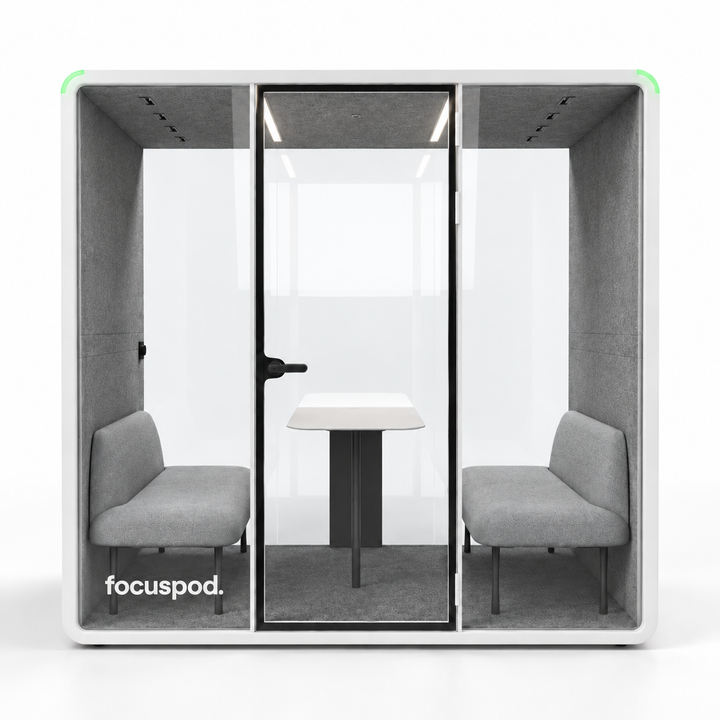
Take a FocusPod Meet, the four-person meeting pod, with installation. The pod is R124,900 and installation is R30,000, so the capitalised cost is R154,900. Written off in equal amounts over six years, at the 27% company rate:
| Line | Amount |
|---|---|
| Capitalised cost | R154,900 |
| Allowance claimed each year | about R25,816 |
| Tax saved each year at 27% | about R6,970 |
| Total relief across the six years | about R41,823 |
| Effective cost of the pod | about R113,077 |
Six years is the period commonly accepted for office furniture and fittings; the period that applies to your asset is a matter for your accountant and the current Interpretation Note 47 schedule. VAT is dealt with separately and is normally claimable as input tax by a registered vendor on a purchase for business use.
Price the pod you actually want
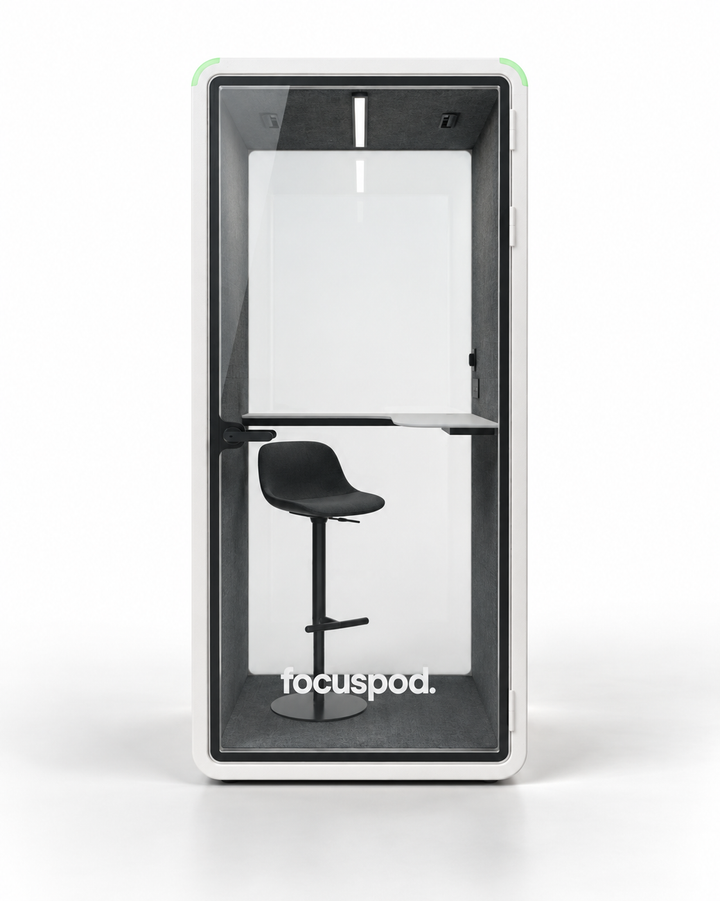
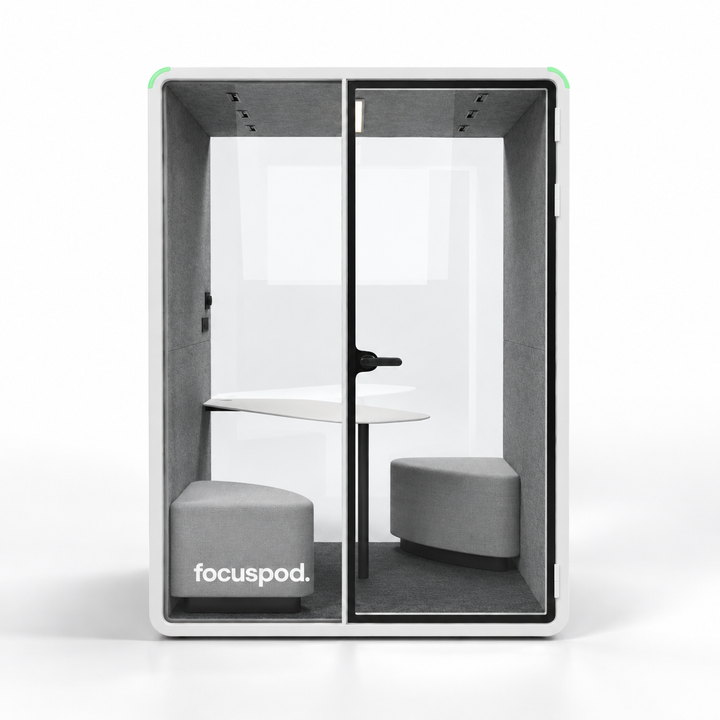
Every FocusPod has a glass front and rear, built-in wheels and adjustable levelling feet.
Three things to get right
Brought into use, not ordered. The allowance starts when the pod is first brought into use in the trade, and it is apportioned in that first year. A pod installed in the last month of your year of assessment attracts roughly a month's worth, not a year's.
Keep it off the fit-out invoice. If a pod is bought inside a wider fit-out contract, have it itemised separately so it is clearly a moveable asset rather than a leasehold improvement. Our quotations list the pod, delivery and installation as separate lines for exactly this reason.
Check the small business corporation position. If you qualify, the accelerated write-off under section 12E is usually worth more than the standard six-year spread, and it is the first thing to ask your accountant about.
Common questions
Can I write an office pod off in the first year?
Not under the standard section 11(e) treatment, which spreads the cost over the accepted write-off period. A qualifying small business corporation may be able to accelerate it under section 12E. Your accountant will confirm which applies to you.
Is a pod treated differently from partitioning?
Yes, in substance. Partitioning is a leasehold improvement tied to the premises. A freestanding pod is a moveable asset that remains yours when you change buildings, which is also why it needs no landlord construction approval.
Does installation form part of the cost?
Costs of bringing an asset into use are generally capitalised with it, which is one reason our quotations itemise delivery and installation rather than burying them. Confirm the treatment with your accountant.
Can we claim the VAT?
A registered vendor buying a pod for business use would normally claim the input tax in the usual way. Your quotation sets out the VAT separately so the treatment is clear.
What about several pods across sites?
Each pod is itemised on the quotation, which keeps the fixed asset register and the allowance straightforward even where pods sit in different provinces.
Ask for it itemised
Build the configuration you want, then ask for the quotation itemised the way your accountant prefers: pod, delivery and installation as separate lines, with VAT shown separately.
This page is general information for South African businesses and is not tax, accounting or financial advice. Rates, write-off periods and the small business corporation rules change. Confirm the current position with your accountant or tax practitioner before relying on any figure here.